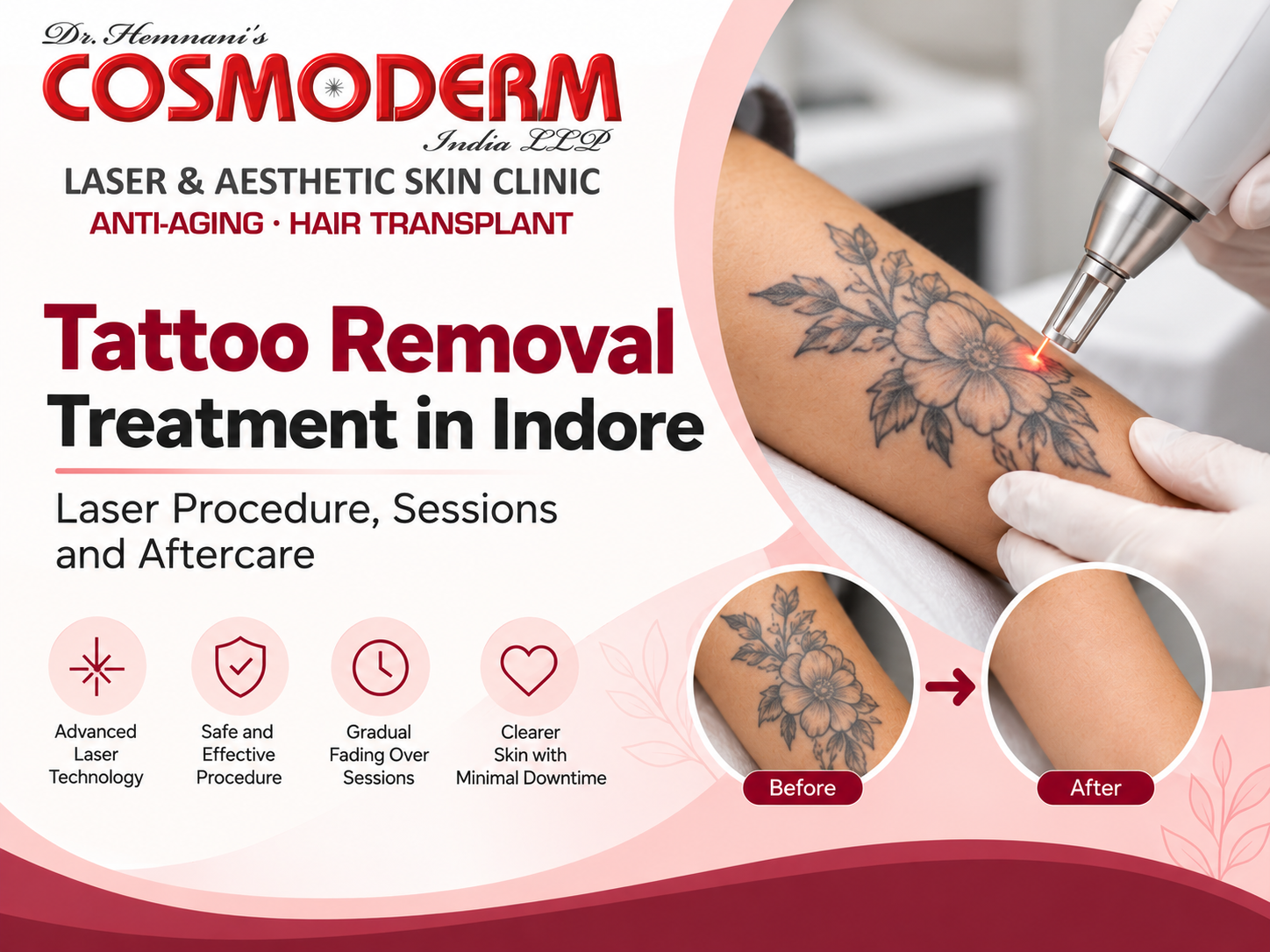
Tattoo Removal Treatment in Indore is a commonly searched option among people who want to remove an unwanted tattoo, fade an old design, or prepare the skin for a cover-up tattoo. Tattoos are created by placing pigment within the skin, which is why they generally do not disappear through ordinary washing, exfoliation, or regular skincare products.
People may consider tattoo removal because their preferences have changed, a tattoo has faded unevenly, the design no longer suits them, or they want to remove a name, symbol, or permanent design. The appropriate approach depends on the tattoo’s colour, size, location, age, depth, and the individual’s skin type.
Laser tattoo removal is one of the established methods used to reduce unwanted tattoo pigment. It works by delivering short pulses of light energy that are absorbed by tattoo particles. The body’s natural clearance processes gradually remove some of the fragmented pigment over time. Multiple sessions are generally required, and complete removal cannot be guaranteed.
At Cosmoderm Skin, Hair & Body Clinic, Dr. Sonal Hemnani is a Gold Medalist dermatologist with expertise in clinical dermatology, cosmetic dermatology, lasers, and injectable procedures. Dr. Dilip Hemnani, the clinic’s founder, has more than 30 years of dermatology experience and pioneered cosmetic lasers in Madhya Pradesh in 2000.
For people considering Tattoo Removal Treatment in Indore, understanding the laser procedure, expected sessions, potential risks, cost factors, and aftercare can help them make an informed decision.
What Is Tattoo Removal Treatment?
Laser treatment breaks the pigment into smaller particles that the body can gradually process. The extent of fading depends on the type of ink, the laser technology, the tattoo’s characteristics, and the body’s response.
Laser Tattoo Removal in New Palasia, Indore may be considered for:
- Unwanted permanent tattoos
- Old or faded tattoos
- Tattoos with outdated designs
- Certain cosmetic tattoos
- Tattoos that need lightening before a cover-up
- Selected tattoos containing multiple ink colours
Not every tattoo responds in the same way. Some colours are more difficult to treat, and certain cosmetic pigments may darken or change colour after laser exposure.
A professional assessment is therefore necessary before selecting a treatment method.

Why Do People Consider Laser Tattoo Removal?
People choose tattoo removal for different personal, professional, or cosmetic reasons. The decision is individual, and there is no requirement to remove a tattoo simply because it has changed in appearance.
Common reasons include:
1. Changing Personal Preferences
A tattoo that once felt meaningful may no longer reflect a person’s interests, identity, or preferences. Removal may be considered when someone no longer wants the design.
2. Faded or Uneven Tattoos
Some tattoos lose definition over time. Laser treatment may help reduce the remaining pigment, although fading does not always result in complete clearance.
3. Preparing for a Cover-Up Tattoo
Some people do not want complete removal but wish to lighten an existing design before getting a new tattoo. Laser treatment may reduce the old pigment so a tattoo artist can assess cover-up options.
4. Removing Names or Symbols
Names, initials, dates, and symbols are among the designs people sometimes decide to remove. The number of sessions depends on the ink and tattoo characteristics rather than the design’s meaning.
5. Cosmetic Concerns
A visible tattoo may no longer suit someone’s preferences or clothing choices. Treatment may be considered for cosmetic reasons, although complete clearance and scar-free results cannot be promised.
People researching Tattoo Removal Treatment in Curewell Hospital Road, Indore should understand that the treatment plan is individualized and that the expected outcome should be discussed before the first session.
How Does Laser Tattoo Removal Work?
Laser tattoo removal uses specific wavelengths of light to target tattoo pigment. When the pigment absorbs the laser energy, it breaks into smaller particles that can gradually be cleared by the body’s immune system.
Different laser systems target different pigment colours. Q-switched lasers and picosecond lasers are examples of technologies used for selected tattoos. The appropriate device depends on the ink colours, skin type, tattoo depth, and available equipment.
The process generally involves the following steps:
Step 1: Skin and Tattoo Assessment
The dermatologist examines the tattoo’s size, location, colours, density, and age. Skin type, previous treatments, scarring, medical history, and any history of unusual healing are also considered.
Step 2: Selecting the Laser
The practitioner chooses a suitable laser wavelength and settings based on the tattoo pigment and the patient’s skin characteristics.
Step 3: Preparing the Treatment Area
The area is cleaned, and appropriate protective eyewear is provided. Eye protection is essential for both the patient and the treating team.
Step 4: Delivering Laser Pulses
The laser is passed over the tattoo to deliver controlled pulses of energy. Patients may experience a snapping sensation, warmth, or discomfort during the procedure.
Step 5: Cooling and Wound Care
Cooling measures may be used to improve comfort. The treated area is assessed, and appropriate wound-care instructions are provided.
Step 6: Allowing the Skin to Recover
The skin needs time to recover between sessions. The body’s clearance of fragmented pigment also takes time, so repeated treatments are generally spaced several weeks apart.
Laser Tattoo Removal Treatment in New Palasia, Indore should be performed by a qualified professional using appropriate equipment, settings, and safety precautions.
Which Types of Tattoos Can Be Removed?
Laser treatment can be used for many professional and amateur tattoos, but the response varies considerably.
Black and Dark Blue Tattoos
Black ink often responds relatively well to appropriate laser wavelengths. Dark blue pigments may also respond, depending on their composition and the device used.
Red Tattoos
Red pigment may require a different wavelength from black ink. The response depends on the exact pigment and the laser system.
Green and Other Coloured Tattoos
Green, turquoise, yellow, and certain other colours can be more difficult to remove. Some may require specialized laser wavelengths, and complete clearance may not be possible.
Multicoloured Tattoos
Tattoos containing several colours may need different laser settings or wavelengths during the treatment course.
Cosmetic Tattoos
Permanent makeup and cosmetic tattoos require particular caution because some pigments can darken after laser exposure. The practitioner should assess the pigment and explain this possibility before proceeding.
Tattoo Removal in South Tukoganj, Indore should not be approached with the assumption that every colour will disappear at the same rate. The likely response should be assessed individually.
How Many Laser Tattoo Removal Sessions Are Needed?
The number of sessions depends on several factors, and there is no universal session count for every tattoo.
Factors that influence treatment requirements include:
- Tattoo size
- Ink colour
- Pigment density
- Depth of ink placement
- Tattoo age
- Location on the body
- Professional or amateur tattooing
- Skin type
- Previous removal treatments
- Individual immune response
Some tattoos show noticeable fading after a few sessions, while others require many more. Dense, multicoloured, or deeply placed tattoos may be particularly challenging.
Sessions are usually spaced several weeks apart, often around six to eight weeks or longer, depending on the device, skin recovery, and clinician’s advice. The skin should have adequate time to heal before another treatment is performed.
A treatment plan should be reviewed as the tattoo fades. Continuing at the same intensity without assessing the skin may increase the risk of complications.
When considering Laser Tattoo Removal in Vijay Nagar, Indore, ask the practitioner for an estimated treatment range rather than a guarantee of complete removal after a fixed number of sessions.
What Is the Procedure for Tattoo Removal?
A laser tattoo removal appointment generally involves consultation, preparation, laser application, and post-treatment instructions.
Before the Procedure
The practitioner reviews the tattoo and your medical history. You should disclose previous laser treatments, scarring, skin conditions, medication use, and any history of abnormal wound healing.
The practitioner may advise avoiding tanning and excessive sun exposure before treatment.
During the Procedure
Protective eyewear is used, and the skin is prepared. The practitioner delivers laser pulses to the tattoo using settings appropriate for the pigment and skin type.
The session may cause temporary discomfort. Cooling or other suitable comfort measures may be used.
Immediately After Treatment
The treated area may become red, swollen, or sensitive. Small blisters, pinpoint bleeding, or temporary crusting can occur depending on the treatment intensity.
The practitioner may apply a suitable dressing or recommend specific wound-care measures.
Between Sessions
The skin needs time to recover, and pigment fading continues gradually. The next appointment should be scheduled according to healing progress rather than immediately repeating the procedure.
Tattoo Removal Treatment in Old Palasia, Indore should include clear instructions about wound care, expected reactions, and symptoms that require medical review.
Does Laser Tattoo Removal Hurt?
Laser tattoo removal can be uncomfortable, but the level of discomfort varies between individuals and treatment areas. Many people describe the sensation as similar to a small elastic band snapping against the skin. Sensitive areas, larger tattoos, and higher treatment intensities may cause greater discomfort. The practitioner may use cooling or an appropriate topical anaesthetic when suitable. Any numbing product should be used according to professional guidance. Pain levels can also vary between sessions depending on the tattoo’s location and the skin’s condition. Tell the practitioner if the discomfort becomes excessive. Treatment settings and comfort measures may need to be adjusted.
What Is the Cost of Tattoo Removal Treatment in Indore?
The cost of Tattoo Removal Treatment in Indore depends on the tattoo and the treatment plan. There is no single price that applies to every person.
Factors that may influence the total cost include:
- Tattoo size and surface area
- Number of colours
- Ink density and depth
- Type of laser technology
- Number of sessions required
- Location of the tattoo
- Complexity of the treatment
- Consultation and follow-up requirements
A small, dark tattoo may require a different treatment plan from a large, multicoloured design. Some tattoos may fade substantially, while others require additional sessions or may not be completely removable. Avoid choosing a provider solely because of an unusually low price. Appropriate equipment, qualified supervision, hygiene, and safe laser settings are important considerations.
What Are the Possible Side Effects of Laser Tattoo Removal?
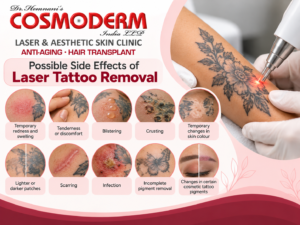
Laser tattoo removal is widely used, but it is not free from risk. The likelihood of complications depends on the laser settings, skin type, tattoo pigment, and aftercare.
Possible side effects include:
- Temporary redness and swelling
- Tenderness or discomfort
- Blistering
- Crusting
- Temporary changes in skin colour
- Lighter or darker patches
- Scarring
- Infection
- Incomplete pigment removal
- Changes in certain cosmetic tattoo pigments
People with darker skin tones may have a higher risk of pigment changes if unsuitable settings are used. A qualified practitioner should select treatment parameters carefully and may recommend a test spot in selected cases. Seek medical advice if you develop increasing pain, spreading redness, pus, fever, extensive blistering, or delayed wound healing. A responsible treatment plan should include an explanation of the possible risks and realistic expectations about the final result.
What Should You Do Before Laser Tattoo Removal?
Preparing the skin can help reduce avoidable complications.
Before treatment:
- Tell the practitioner about current medicines, supplements, allergies, and medical conditions.
- Discuss previous laser treatments and any history of scarring or pigmentation changes.
- Avoid tanning and excessive sun exposure as instructed.
- Do not apply irritating products to the treatment area unless advised.
- Follow the clinic’s instructions regarding shaving or cleaning the area.
- Inform the practitioner if the skin is infected, injured, or inflamed.
- Ask about protective eyewear and the laser equipment being used.
Some medications and skin conditions may affect the treatment plan. Do not stop prescribed medicines without consulting the clinician responsible for your care.
A consultation with the Best Dermatologist in New Palasia, Indore can help determine whether laser tattoo removal is suitable and what precautions may be necessary.
What Aftercare Is Needed After Tattoo Removal?
Aftercare is important because laser treatment can temporarily damage the skin barrier. Proper wound care helps support healing and may reduce the risk of infection or scarring.
1. Keep the Area Clean
Clean the treated area according to the practitioner’s instructions. Avoid rubbing, scrubbing, or unnecessary touching.
2. Use Recommended Dressings
If a dressing is advised, change it as instructed. Use only the products recommended for the treated skin.
3. Do Not Pick Blisters or Scabs
Blisters and crusts can develop after treatment. Picking them may increase the risk of infection, scarring, or pigment changes.
4. Avoid Excessive Sun Exposure
Protect the treated area from direct sunlight. Once the skin has healed sufficiently, use broad-spectrum sunscreen on exposed areas as advised.
5. Avoid Irritating Products
Do not apply exfoliating acids, retinoids, bleaching products, or other irritating skincare ingredients to the healing area unless the practitioner approves them.
6. Follow Activity Instructions
Follow guidance about swimming, strenuous exercise, friction, and activities that may irritate the treated skin while it heals.
7. Attend Follow-Up Appointments
The practitioner can assess the healing response and decide when another session may be appropriate.
Tattoo Removal Treatment in Saket Nagar, Indore should include individualized aftercare advice because the appropriate instructions may differ according to the laser settings and the skin’s reaction.
How Long Does Tattoo Removal Take to Heal?
The initial skin reaction often improves over several days, but complete recovery may take one to two weeks or longer, depending on the treatment intensity and individual healing response.
Redness, swelling, or tenderness may occur immediately after treatment. Some patients develop blisters or crusts that require additional care.
The visible tattoo may not fade immediately. Even when the surface skin looks normal, the body may still be clearing fragmented pigment.
Is Laser Tattoo Removal Safe for All Skin Types?
Laser tattoo removal can be performed on many skin types, but the device, wavelength, and settings must be selected carefully.
Melanin in the skin can absorb some laser energy, creating a risk of burns or temporary or persistent pigment changes if unsuitable settings are used. This is particularly relevant for people with darker skin tones.
A qualified practitioner may choose a suitable laser, conservative initial settings, or a test spot when appropriate.
The practitioner should also evaluate any active skin condition, tendency to form raised scars, and previous reactions to cosmetic procedures.
Laser Tattoo Removal Treatment in New Palasia, Indore should be based on an individualized assessment rather than a one-size-fits-all protocol.
Why Choose Dr. Sonal Hemnani for Laser Skin Treatments?
Dr. Sonal Hemnani is a Gold Medalist dermatologist with expertise in clinical dermatology, cosmetic dermatology, lasers, and injectable procedures.
She completed her MBBS from Gandhi Medical College, Bhopal, and MD in Dermatology from People’s Medical College.
Her professional areas of expertise include:
- Clinical dermatology
- Cosmetic dermatology
- Laser treatments
- Pigmentation management
- Skin rejuvenation
- Hair and skin concerns
- Injectable procedures
For people looking for a Cosmetic Dermatologist in Indore, it is important to confirm the practitioner’s experience with the specific laser technology and tattoo colours involved. The practitioner should also explain potential side effects and aftercare.
Why Choose Cosmoderm Skin, Hair & Body Clinic?
Cosmoderm Skin, Hair & Body Clinic was founded in 1993 by Dr. Dilip Hemnani. The clinic has more than three decades of experience in dermatology, skincare, hair treatments, laser procedures, and cosmetic care.
Dr. Dilip Hemnani has over 30 years of dermatology experience and pioneered cosmetic lasers in Madhya Pradesh in 2000. Dr. Sonal Hemnani has expertise in clinical and cosmetic dermatology.
The clinic’s areas of care include:
- Skin and hair concerns
- Clinical dermatology
- Cosmetic dermatology
- Laser treatments
- Pigmentation management
- Acne and acne scars
- Skin rejuvenation
- Aesthetic procedures
Patients considering laser tattoo removal should confirm the availability of the specific service, the laser system used, the professional performing the procedure, and the expected cost.
A personalized consultation should cover treatment suitability, likely session requirements, possible complications, and the aftercare needed.
Frequently Asked Questions – Tattoo Removal Treatment in Indore
1. What is Tattoo Removal Treatment in Indore?
It is a procedure intended to reduce unwanted tattoo pigment. Laser treatment is commonly used to break pigment into smaller particles that the body gradually clears.
2. How many sessions are required for laser tattoo removal?
The number varies according to tattoo size, colour, ink density, location, and individual response. Several sessions are often needed, and complete removal is not guaranteed.
3. Is laser tattoo removal painful?
It can cause a snapping sensation, warmth, or discomfort. Cooling and suitable anaesthetic measures may help improve comfort when recommended by the practitioner.
4. What is the cost of tattoo removal in Indore?
The cost depends on tattoo size, colours, laser technology, session requirements, and clinical fees. A personalized estimate should be obtained after examination.
5. Can black tattoos be removed more easily than coloured tattoos?
Black ink often responds well to suitable laser wavelengths. Green, yellow, and some other colours may be more difficult to remove, depending on the pigment and equipment.
6. Are there side effects of laser tattoo removal?
Possible effects include redness, swelling, blistering, temporary pigment changes, scarring, and infection. Appropriate laser settings and aftercare help reduce avoidable risks.
7. How long does the skin take to heal after treatment?
Initial recovery often takes several days to two weeks or longer. The tattoo itself fades gradually over the following weeks and may require several treatment sessions.
8. Can tattoo removal leave scars?
Scarring is possible, although it does not occur in every case. The risk depends on the tattoo, previous skin damage, treatment settings, and healing response.
9. Can I remove a tattoo at home?
Home remedies, abrasive methods, and unregulated tattoo-removal creams can irritate or damage the skin and may cause scarring. Professional assessment is safer.
10. Who should I consult for laser tattoo removal?
Consult a qualified dermatologist or another appropriately trained medical professional experienced in laser tattoo removal. Ask about the equipment, risks, expected results, and treatment plan.
Conclusion – Tattoo Removal Treatment in Indore
Tattoo Removal Treatment in Indore can help reduce unwanted tattoo pigment through a carefully planned course of laser sessions. The procedure works by targeting tattoo ink so that the body’s natural clearance processes can gradually remove some of the fragmented pigment.
The number of sessions and the final result depend on tattoo size, colour, depth, skin type, and individual response. Some tattoos fade substantially, while others may leave residual pigment or require additional treatment.
At Cosmoderm Skin, Hair & Body Clinic, Dr. Sonal Hemnani and Dr. Dilip Hemnani bring experience in dermatology, cosmetic skin care, and laser treatments. Patients should confirm the availability of tattoo removal services and discuss the appropriate laser, expected sessions, cost, risks, and aftercare before proceeding.
With a suitable treatment plan, realistic expectations, and proper aftercare, people can make informed decisions about reducing or removing an unwanted tattoo.