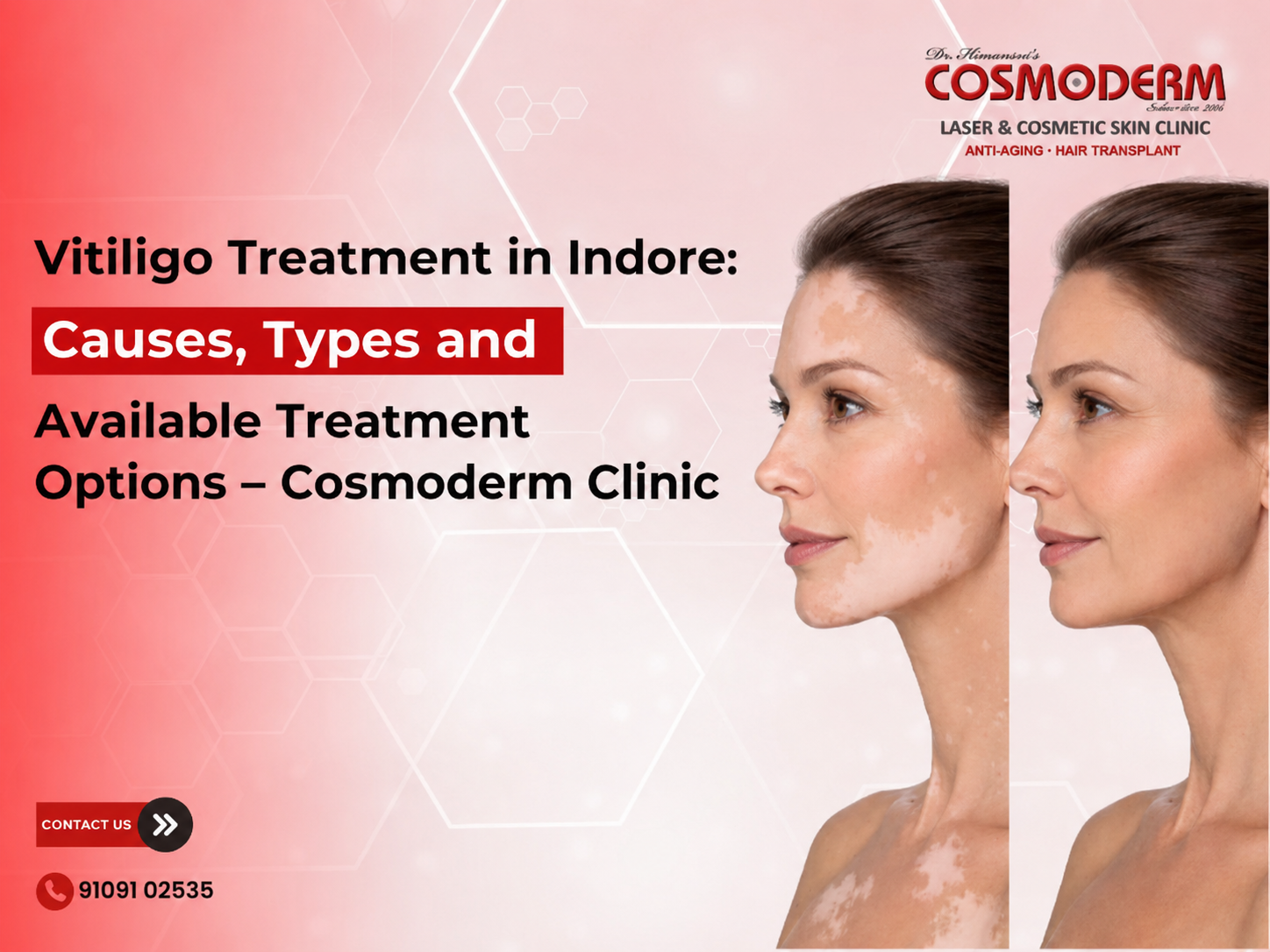
Vitiligo Treatment in Indore is an important dermatology treatment for individuals who notice white or depigmented patches appearing on different areas of the skin. Vitiligo occurs when melanocytes, the cells responsible for producing melanin, are damaged or lost, resulting in lighter or white patches on the skin. Although vitiligo is not contagious, visible changes in skin colour can affect confidence and emotional well-being. Fortunately, modern dermatology offers several treatment approaches that may help restore pigmentation and manage the condition depending on its type, extent, stability, and individual skin characteristics. At Cosmoderm Clinic, home to the Best Dermatologists in Indore, patients receive comprehensive evaluation and individualized vitiligo treatment using modern dermatological approaches. Dr. Sonal Hemnani, a Gold Medalist Dermatologist, and Dr. Dilip Hemnani, with over 30 years of dermatology experience, provide treatment plans based on the patient’s condition, skin type, and treatment requirements.
Best Dermatologists in Indore – Cosmoderm Clinic
Best Dermatologists in Indore are available at Cosmoderm Clinic, a dermatology and skin care center established in 1993 by Dr. Dilip Hemnani. The clinic provides dermatology, laser, cosmetic, and aesthetic skin care services using modern medical technology and evidence-based treatment approaches.
Dr. Sonal Hemnani, a Gold Medalist Dermatologist, completed her MBBS from Gandhi Medical College, Bhopal, followed by MD in Dermatology and DNB. She specializes in clinical dermatology, cosmetic dermatology, laser treatments, and injectables, with a focus on evaluating individual skin concerns and selecting appropriate treatment options.
With over 30 years of experience, Dr. Dilip Hemnani has extensive experience in dermatology, cosmetic procedures, and laser-based skin treatments. Together, the dermatology team at Cosmoderm Clinic provides comprehensive care for a wide range of skin conditions, including pigmentation disorders such as vitiligo.
What Is Vitiligo?
Vitiligo Treatment in Indore begins with understanding what causes the characteristic white patches associated with this condition. Vitiligo is a long-term skin condition in which areas of the skin lose melanin, the pigment responsible for skin colour. This happens when melanocytes, the cells that produce melanin, are damaged or no longer function normally.
Vitiligo can affect any part of the body, including the face, hands, arms, feet, lips, areas around the eyes, and other body regions. In some individuals, the hair within affected areas may also become white or grey.
Vitiligo is not an infection and does not spread from one person to another. The condition can vary considerably from one individual to another, with some people developing only a few small patches while others may experience more extensive depigmentation.
Why Does Vitiligo Develop?
Vitiligo Treatment in Indore is often considered after identifying the pattern, progression, and possible contributing factors associated with the condition.
The exact cause of vitiligo is not completely understood. However, non-segmental vitiligo is generally considered an autoimmune condition in which the immune system mistakenly attacks melanocytes.
Possible factors associated with vitiligo include:
- Autoimmune activity
- Family history of vitiligo
- Genetic susceptibility
- Other autoimmune conditions
- Skin injury or trauma
- Severe sunburn
- Hormonal changes
- Certain environmental or chemical triggers
- Emotional or physical stress in some individuals
Not every person with vitiligo has an identifiable trigger. A dermatological evaluation is important to understand the condition and distinguish it from other causes of light or white patches.
Common Types of Vitiligo
Vitiligo Treatment in Indore depends partly on identifying the type and distribution of depigmented patches.
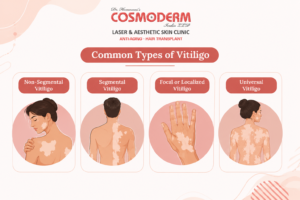
The main types of vitiligo include:
Non-Segmental Vitiligo
Non-segmental vitiligo is the most common form. White patches may appear on both sides of the body and can affect areas such as the hands, arms, face, knees, elbows, and skin around body openings.
Segmental Vitiligo
Segmental vitiligo usually affects one particular area or side of the body. It may develop earlier in life and can behave differently from non-segmental vitiligo.
Focal or Localized Vitiligo
In some individuals, depigmentation remains limited to one or a few specific areas of the body without a widespread distribution.
Universal Vitiligo
In rare cases, depigmentation can affect most of the body’s skin surface. This is known as universal vitiligo.
Correctly identifying the type and extent of vitiligo helps the dermatologist determine the most appropriate management approach.
What Are the Common Symptoms of Vitiligo?
Vitiligo Treatment in Indore may be considered when individuals notice changes in skin colour that are consistent with vitiligo.
Common signs and symptoms include:
- White or depigmented patches on the skin
- Pale patches that gradually become whiter
- Patches on the face, hands, feet, or arms
- Loss of pigmentation around the eyes or mouth
- White or grey hair in affected areas
- Symmetrical patches on different parts of the body
- Depigmentation limited to one area in segmental vitiligo
- Occasional mild itching in affected areas
Vitiligo itself usually does not cause pain or significant skin dryness. However, depigmented skin contains less melanin and is more vulnerable to sunburn, making sun protection particularly important.
How Is Vitiligo Diagnosed?
Vitiligo Treatment in Indore starts with an accurate diagnosis because several other skin conditions can produce lighter-looking patches.
During a dermatological evaluation, the doctor may assess:
- Location of the white patches
- Size and distribution of affected areas
- Duration of pigmentation loss
- Whether new patches are developing
- Family history of vitiligo
- History of autoimmune conditions
- Previous skin injuries or inflammation
- Changes in hair pigmentation
- Previous treatments
A Wood’s lamp examination may also be used to make depigmented areas easier to identify and to help distinguish vitiligo from certain other pigmentation disorders. Depending on the patient’s history and symptoms, the dermatologist may also consider evaluation for associated autoimmune conditions.
Best Treatments for Vitiligo
Vitiligo Treatment in Indore includes several approaches depending on the type, extent, location, activity, and stability of the condition. Treatment does not follow a single approach for every patient, and a dermatologist may recommend one treatment or a combination of treatments.
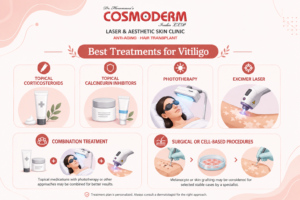
Some commonly considered treatment options include:
Topical Corticosteroids
Topical corticosteroids may be prescribed for selected patients to help slow the progression of depigmentation and encourage repigmentation. Their use needs to be carefully monitored because prolonged or inappropriate use can cause skin-related side effects.
Topical Calcineurin Inhibitors
Medicines such as tacrolimus or pimecrolimus may be considered for certain areas, particularly where prolonged steroid use may be less suitable. These medicines should only be used according to a dermatologist’s recommendation.
Phototherapy
Phototherapy uses controlled ultraviolet light to stimulate repigmentation. Narrowband UVB is an established treatment approach for more widespread vitiligo and may be used when topical treatments are insufficient.
Phototherapy generally requires repeated treatment sessions and should be performed under appropriate dermatological supervision.
Excimer Laser
Excimer laser or targeted phototherapy may be considered for selected localized areas of vitiligo. It delivers concentrated light to affected areas and may be used as part of an individualized treatment plan.
Combination Treatment
In some cases, dermatologists may combine topical medications with phototherapy or other treatment approaches to improve repigmentation. The appropriate combination depends on the patient’s condition and response to treatment.
Surgical or Cell-Based Procedures
For selected stable cases, surgical procedures such as melanocyte or skin grafting may be considered. These approaches are generally reserved for carefully selected patients whose vitiligo is stable and suitable for such procedures.
How Do Dermatologists Choose the Right Vitiligo Treatment?
Vitiligo Treatment in Indore is not a one-size-fits-all procedure. Treatment selection depends on several individual factors because vitiligo can behave differently from one person to another.
Before recommending treatment, the dermatologist may evaluate:
- Type of vitiligo
- Extent of affected skin
- Location of white patches
- Duration of the condition
- Whether the vitiligo is stable or progressing
- Patient’s age
- Skin type
- Presence of active lesions
- Previous treatments
- Response to earlier treatment
- Overall health and medical history
This detailed assessment helps the dermatologist determine whether topical treatment, phototherapy, targeted treatment, combination therapy, or another approach may be appropriate.
Who Is a Good Candidate for Vitiligo Treatment?
Vitiligo Treatment in Indore may be suitable for individuals who have:
- Newly developed white patches
- Persistent depigmented areas
- Vitiligo affecting visible parts of the body
- Progressive pigmentation loss
- Stable vitiligo suitable for selected procedures
- Facial or hand involvement
- Vitiligo affecting quality of life or confidence
- Previous treatment with limited improvement
Not everyone with vitiligo requires active treatment. Some individuals may prefer observation, sun protection, or cosmetic camouflage, while others may seek repigmentation treatment. A dermatologist can help determine the most appropriate option based on individual circumstances.
Benefits of Vitiligo Treatment
Vitiligo Treatment in Indore aims to improve the appearance of depigmented areas and, where possible, encourage restoration of skin colour. Treatment goals vary depending on the extent and type of vitiligo and the patient’s individual expectations.
Some potential benefits of appropriate treatment include:
- Helps improve the appearance of white patches
- May encourage repigmentation in suitable cases
- Helps manage active or spreading vitiligo
- Can improve skin colour uniformity
- May improve confidence and emotional well-being
- Treatment can be selected according to individual skin characteristics
- Helps provide appropriate sun-protection guidance
- Allows ongoing monitoring of pigmentation changes
- May combine different treatment approaches when appropriate
Treatment results can vary between individuals, and repigmentation may take time. Some treatments may not provide permanent results or completely prevent new patches from developing.
Aftercare Tips Following Vitiligo Treatment
Vitiligo Treatment in Indore provides better support for the skin when patients follow the aftercare and sun-protection instructions provided by their dermatologist. Depigmented skin contains less melanin and can burn more easily when exposed to sunlight.
Some important care tips include:
- Apply sunscreen regularly as advised by your dermatologist.
- Protect depigmented areas from excessive sun exposure.
- Avoid sunburn and tanning beds.
- Follow prescribed topical medication instructions.
- Do not apply steroid creams without medical guidance.
- Follow the recommended phototherapy schedule if prescribed.
- Avoid self-treatment with unverified remedies.
- Monitor changes in existing or new white patches.
- Attend recommended follow-up appointments.
- Maintain a consistent skin-care routine.
Sun protection is particularly important because vitiligo-affected skin has reduced natural protection from ultraviolet radiation.
When Should You Visit a Dermatologist for Vitiligo?
Vitiligo Treatment in Indore should be considered when you notice new white patches, changes in existing depigmented areas, or unexplained loss of skin colour.
You should consult a dermatologist if you have:
- New white patches appearing on the skin
- Patches that are gradually increasing in size
- Multiple areas of depigmentation
- White patches around the eyes or mouth
- White or grey hair developing in a patch
- Pigmentation changes after skin injury
- Family history of vitiligo
- Existing autoimmune conditions
- Uncertainty about whether a white patch is vitiligo
- Emotional distress related to changes in skin appearance
Early dermatological evaluation can help establish the diagnosis, identify the type of vitiligo, assess its activity, and discuss appropriate management options.
Why Choose Cosmoderm Clinic for Vitiligo Treatment in Indore?
Cosmoderm Clinic provides dermatology care for individuals experiencing pigmentation disorders, including vitiligo, using modern diagnostic and treatment approaches. Established in 1993 by Dr. Dilip Hemnani, the clinic has more than three decades of experience in dermatology, skin care, laser treatments, and cosmetic procedures.
Dr. Sonal Hemnani, a Gold Medalist Dermatologist, specializes in clinical dermatology, cosmetic dermatology, laser treatments, and injectables. Together with Dr. Dilip Hemnani, who has more than 30 years of dermatology experience, the clinic provides treatment plans based on the patient’s skin condition, medical history, and individual requirements.
Patients choose Cosmoderm Clinic because of:
- 30+ Years of Dermatology Experience
- Founded in 1993
- Home to the Best Dermatologists in Indore
- Dr. Dilip Hemnani – 30+ Years of Experience
- Dr. Sonal Hemnani – Gold Medalist Dermatologist
- Advanced Dermatology and Skin Care Procedures
- Modern Laser and Light-Based Treatment Options
- Comprehensive Skin and Hair Care Services
- Individualized Treatment Planning
- Evidence-Based Dermatology Care
- Patient-Centred Approach
At Cosmoderm Clinic, each patient’s skin condition is evaluated individually because vitiligo can vary significantly in its pattern, extent, activity, and response to treatment. The treatment approach is selected according to the patient’s specific condition and dermatological assessment.
Summary
Vitiligo Treatment in Indore offers different approaches for individuals experiencing white or depigmented patches on the skin. Vitiligo is a long-term pigmentation disorder associated with loss or dysfunction of melanocytes, and non-segmental vitiligo is commonly linked with autoimmune activity. The condition can affect different parts of the body and may vary considerably from one individual to another.
Modern treatment options may include topical medications, phototherapy, targeted light-based treatments, combination therapies, and selected surgical or cell-based procedures. The most suitable approach depends on the type, extent, activity, stability, location, and individual characteristics of the condition.
At Cosmoderm Clinic, Dr. Sonal Hemnani and Dr. Dilip Hemnani provide dermatological evaluation and individualized treatment planning for pigmentation concerns. With modern dermatology technology and extensive clinical experience, the focus is on appropriate diagnosis, realistic treatment goals, and long-term skin care.
FAQs – Vitiligo Treatment in Indore
What is vitiligo and why does it cause white patches?
Vitiligo is a long-term skin condition in which melanocytes, the cells responsible for producing melanin, are lost or stop functioning in affected areas. This results in lighter or white patches of skin.
Who are the Best Dermatologists in Indore for Vitiligo Treatment?
Dr. Sonal Hemnani and Dr. Dilip Hemnani at Cosmoderm Clinic provide dermatological evaluation and individualized treatment approaches for pigmentation disorders, including vitiligo.
Can vitiligo be completely cured?
Vitiligo is a long-term condition, and treatment results vary from person to person. Some treatments can encourage repigmentation and improve the appearance of affected areas, but treatment does not always permanently restore pigmentation or prevent new patches.
What is the best treatment for vitiligo?
There is no single treatment that is best for every patient. Depending on the condition, dermatologists may consider topical medications, phototherapy, targeted light treatment, combination approaches, or selected procedures.
Is phototherapy effective for vitiligo?
Phototherapy can help encourage repigmentation in suitable patients, particularly when vitiligo is more widespread or topical treatments have not provided sufficient improvement. Treatment requires repeated sessions and appropriate dermatological supervision.
Can vitiligo spread from one person to another?
No. Vitiligo is not an infection and is not contagious. It cannot be transmitted through physical contact or by living with someone who has the condition.
How many sessions are needed for vitiligo treatment?
The number of treatment sessions varies depending on the type and extent of vitiligo, the treatment selected, the affected body area, and the individual’s response. Phototherapy, for example, generally requires repeated sessions.
Is vitiligo treatment safe?
Many established vitiligo treatments can be used safely when appropriately selected and monitored by a qualified dermatologist. Some treatments, including topical steroids and phototherapy, have specific risks and precautions, so they should be used according to medical guidance.
Can vitiligo be prevented?
There is currently no guaranteed way to prevent vitiligo. However, protecting the skin from sunburn and avoiding unnecessary skin injury can be important, particularly because depigmented skin has less natural protection from ultraviolet radiation.
Why choose Cosmoderm Clinic for Vitiligo Treatment?
Patients can receive dermatological evaluation and individualized treatment planning at Cosmoderm Clinic, supported by more than 30 years of dermatology experience, modern treatment options, and the expertise of Dr. Sonal Hemnani and Dr. Dilip Hemnani.
Conclusion – Vitiligo Treatment in Indore
Vitiligo Treatment in Indore has evolved with several treatment options designed to manage depigmented skin and, in suitable patients, encourage repigmentation. Because vitiligo can differ in type, extent, activity, and progression, the right treatment should be selected after a proper dermatological evaluation. Early assessment can also help distinguish vitiligo from other conditions that may cause lighter patches on the skin.
At Cosmoderm Clinic, Dr. Sonal Hemnani and Dr. Dilip Hemnani provide comprehensive dermatology care using individualized treatment plans based on each patient’s condition and treatment requirements. With decades of dermatology experience and modern skin treatment approaches, the clinic focuses on appropriate diagnosis, safe management, and realistic treatment goals for individuals living with vitiligo.